

Shared Objective
Frame every specialist task around one agreed business outcome and completion boundary.
Coordinated Multi-Task AI Systems
ASFIT Solutions designs controlled multi-task agent systems where specialized AI task roles coordinate research, context processing, system actions, communication steps, dependencies, and review around an agreed business objective.
Coordinated Execution
When a business goal requires research, database lookups, drafting, and system writes, specialist task agents can handle separate responsibilities under a unified coordination layer.
Frame every specialist task around one agreed business outcome and completion boundary.
Assign separate roles for research, records, documents, communication, or other approved responsibilities.
Route context, enforce dependencies, and combine results through an agreed orchestration layer.
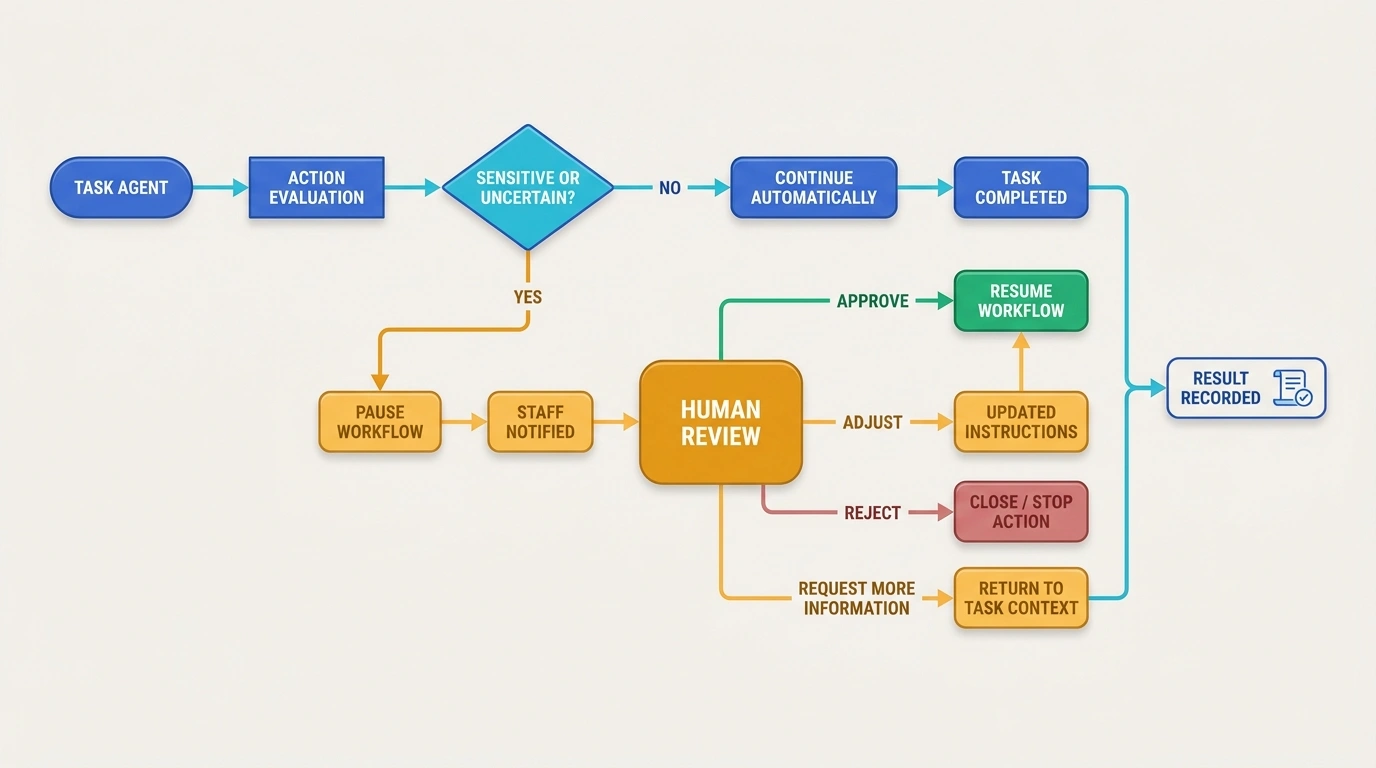
Pause sensitive, uncertain, or exceptional actions for authorized staff review where required.
Target Operational Scenarios
Select an operational category to explore how coordinated task roles can support complex business workflows.
Organizations where complex objectives require multiple departments, staged approvals, and data handoffs across fragmented software tools.
Businesses coordinating research, customer records, documents, communication, and delivery steps around a shared client objective.
Teams that need specialist processing around structured data, controlled APIs, task dependencies, and reviewable results.
Sales workflows that coordinate account research, CRM updates, document preparation, and approved communication tasks.
Teams that gather approved sources, assemble context, prepare documents, and route work through reviewable specialist roles.
Support operations that coordinate customer context, records, documents, responses, and escalation paths.
Organizations where a defined objective crosses several compatible tools and needs visible task ownership and handoffs.
Teams managing repeated dependencies, policy checks, approval conditions, and exception routes across business tasks.
Workflow Fragmentation
A single objective can become slow when research, records, documents, communication, and approvals move through disconnected manual chains.
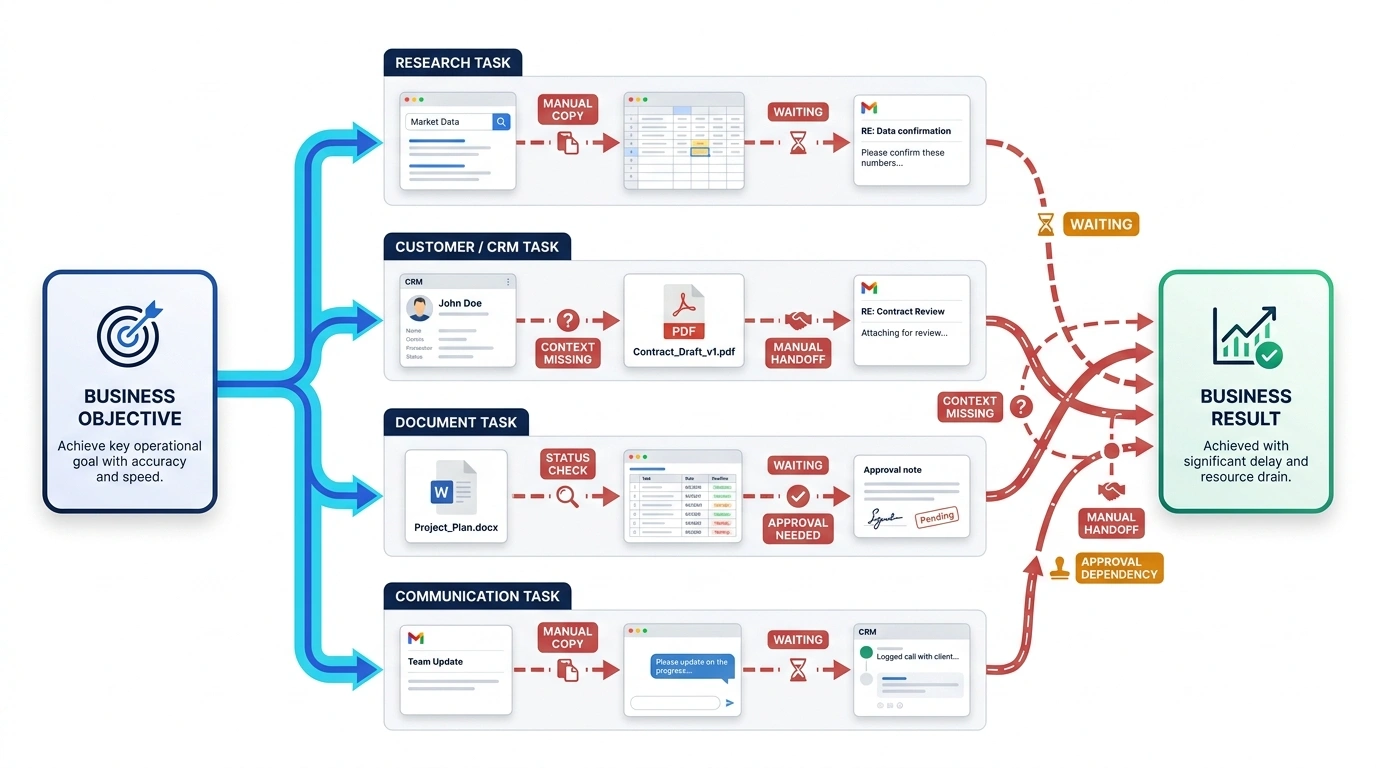
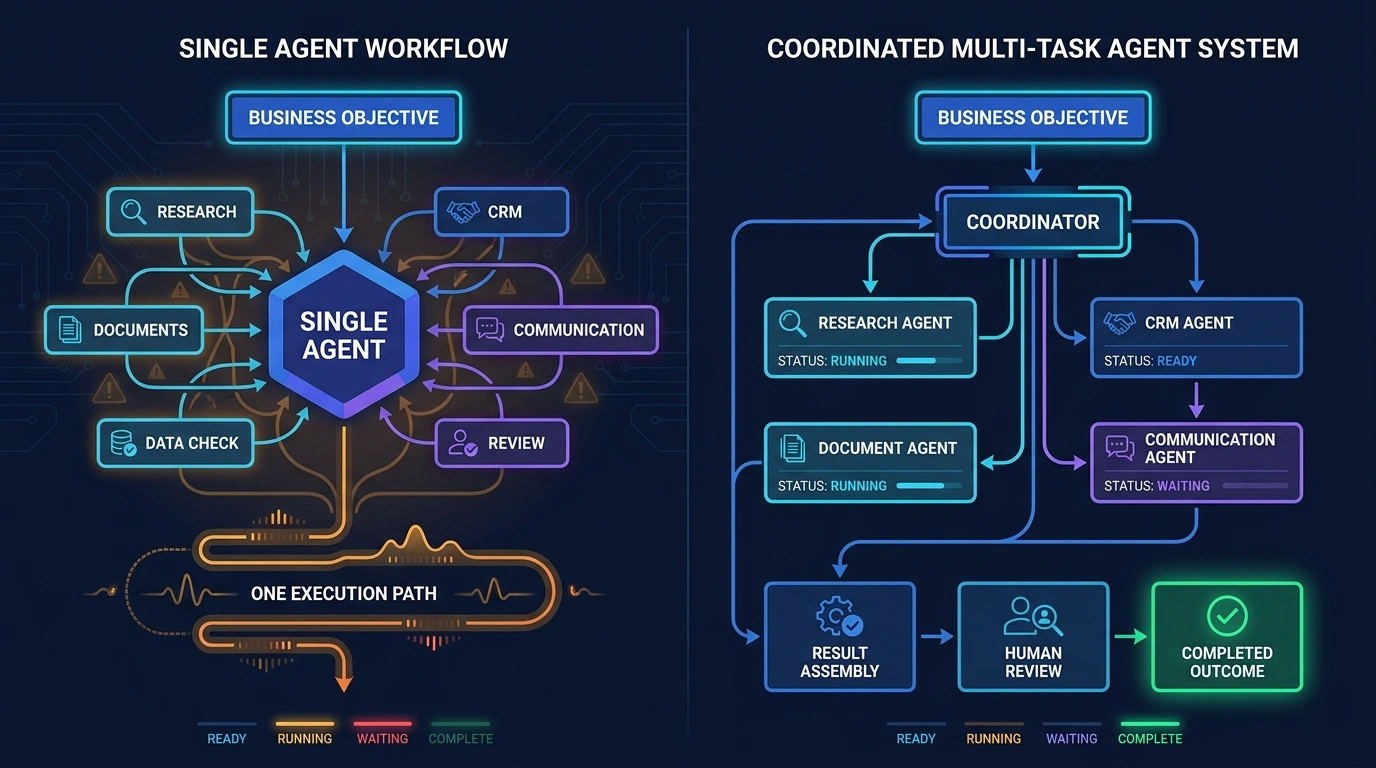
Workflow Comparison
A visual comparison between one execution path and specialist task roles coordinated around a shared objective.
Single Agent Workflow
Coordinated Multi-Task System
Modular Capabilities
Every multi-task agent system is assembled from modular components matched to your objectives, approved systems, permissions, integrations, and agreed scope.
A central objective can be decomposed into defined specialist tasks.
Individual roles can focus on research, records, documents, or communication.
Controlled background information can be routed only to relevant task roles.
Downstream work can wait for prerequisite results or approvals.
Whitelisted sources and business policies can guide suitable tasks.
Role-scoped credentials can limit actions to agreed systems.
Supported internal and third-party APIs can connect selected tasks.
Authorized customer records can support compatible CRM operations.
Results can pass between sequential or dependent specialist tasks.
Sensitive decisions can pause for authorized staff review.
Task states, actions, dependencies, and outcomes can be recorded.
Blocked tasks can follow configured fallback, escalation, or review paths.
Available capabilities depend on project objectives, approved systems, permissions, integrations, and agreed scope.
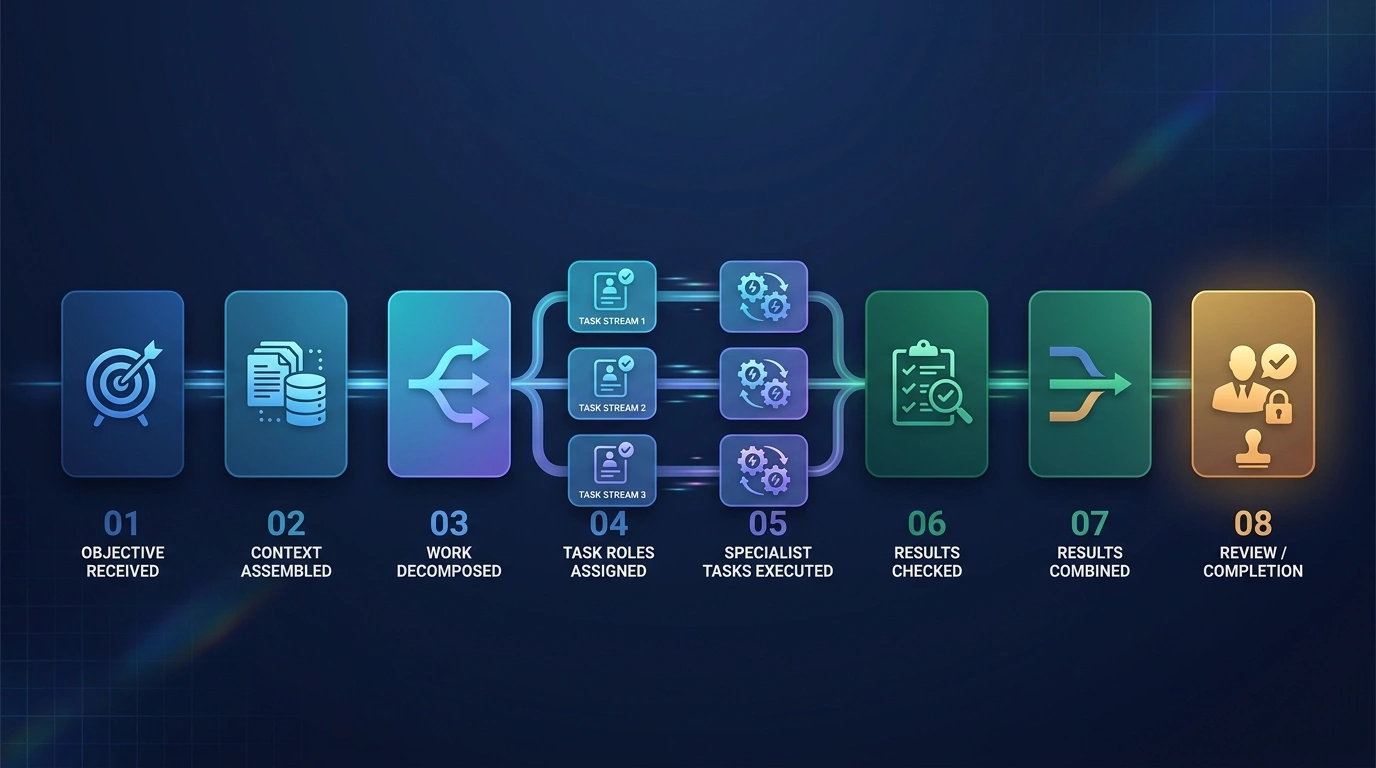
Runtime Lifecycle
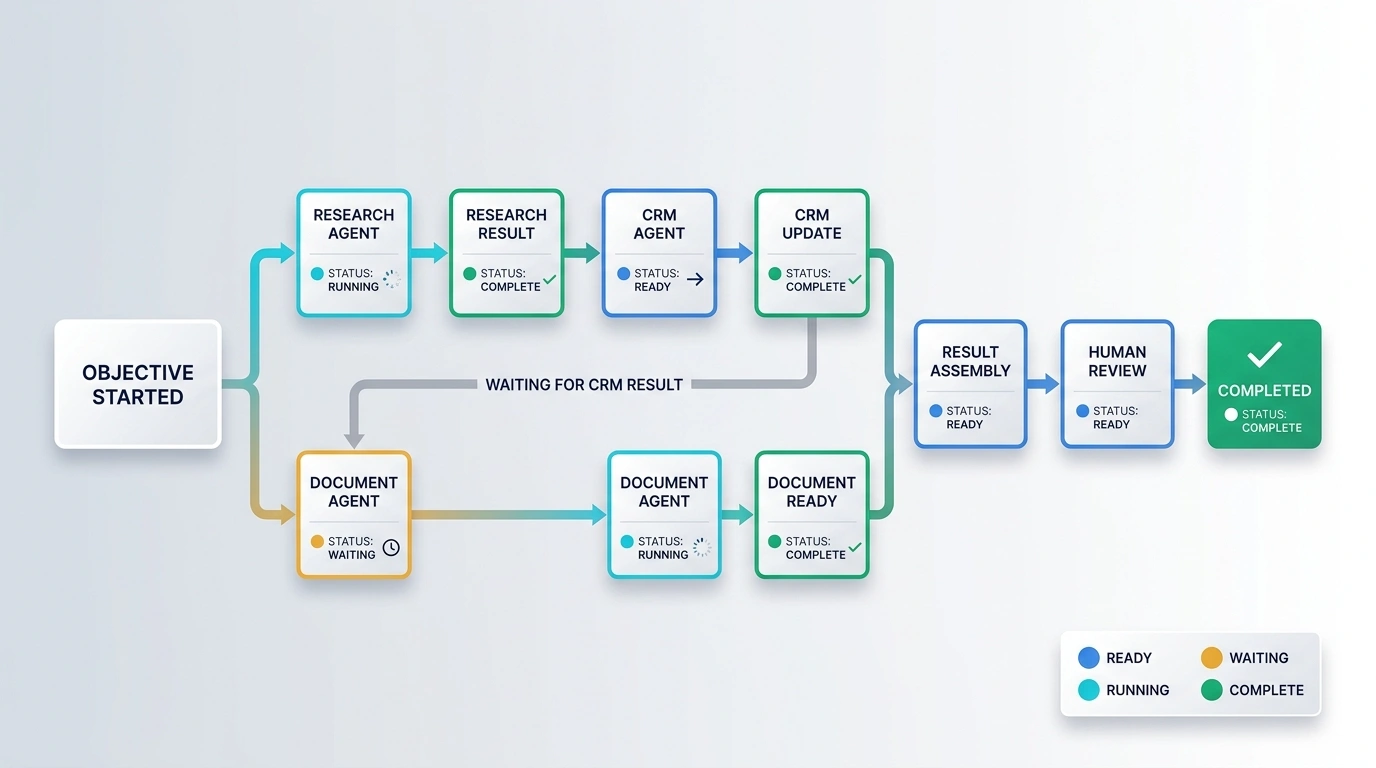
The operational lifecycle followed during a controlled multi-task agent execution.
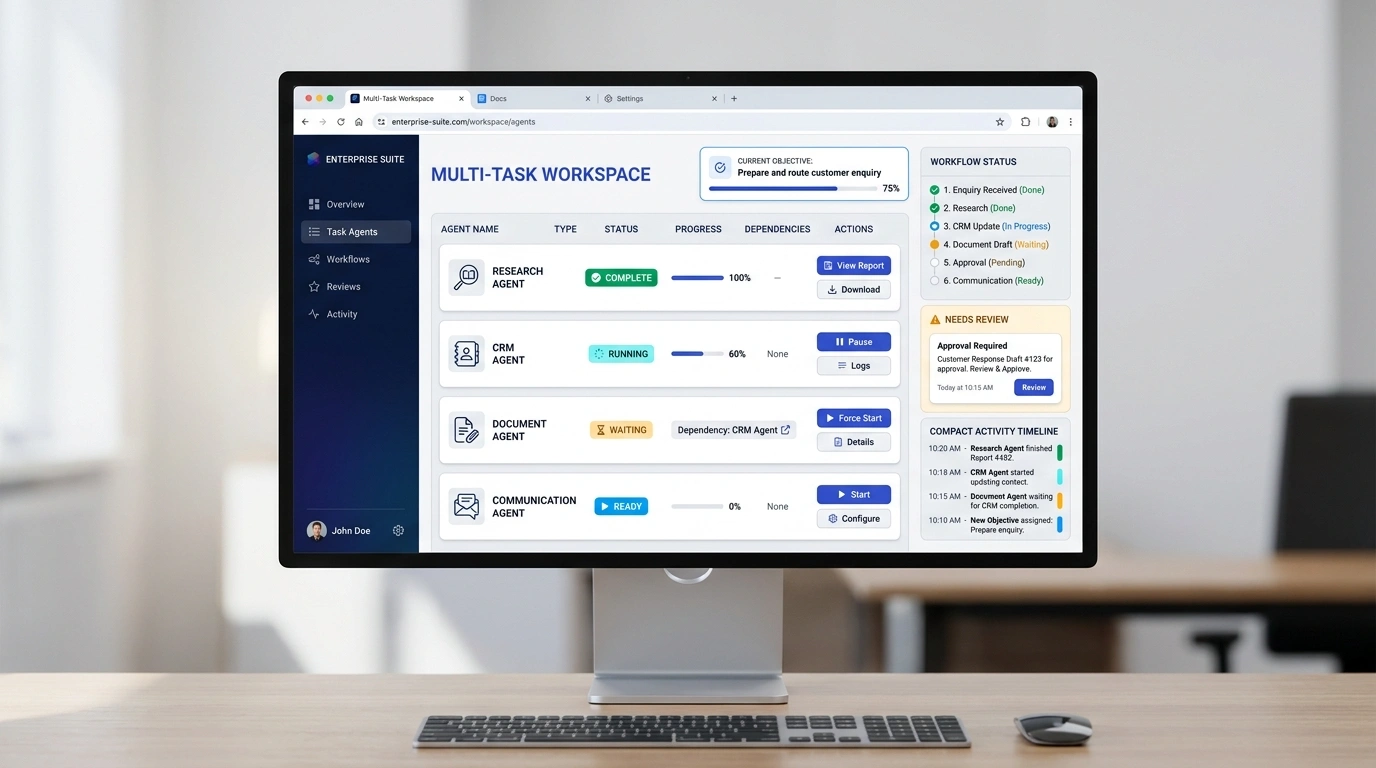
Orchestration Visibility
A structured workspace can provide visibility into current task states, dependencies, review queues, execution progress, and recorded activity.
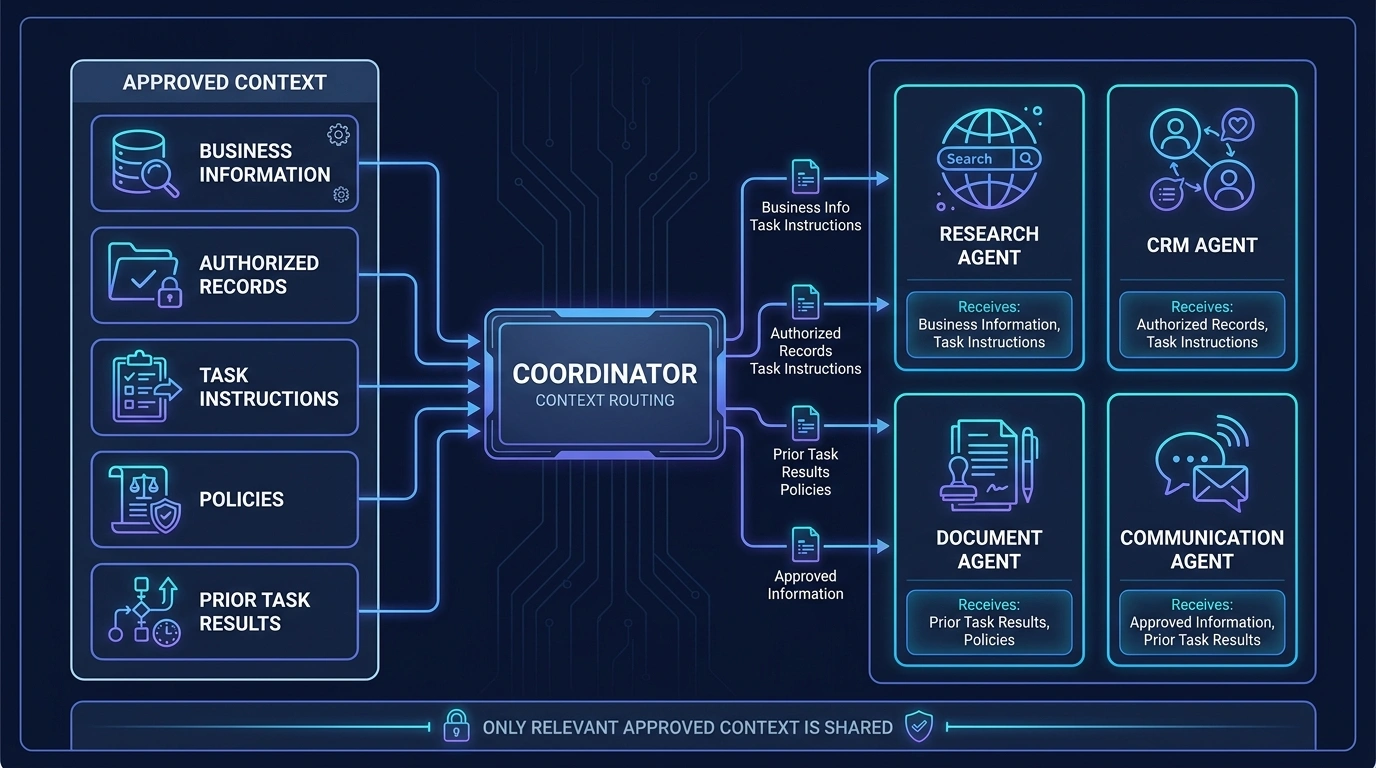
Controlled Context
Instead of exposing every source to every role, the coordinator can route approved and relevant information to each task agent according to the agreed workflow.
Task Coordination
Multi-task workflows can model operational dependencies. A task can wait for a prerequisite result, approval, or data check before the next role continues.
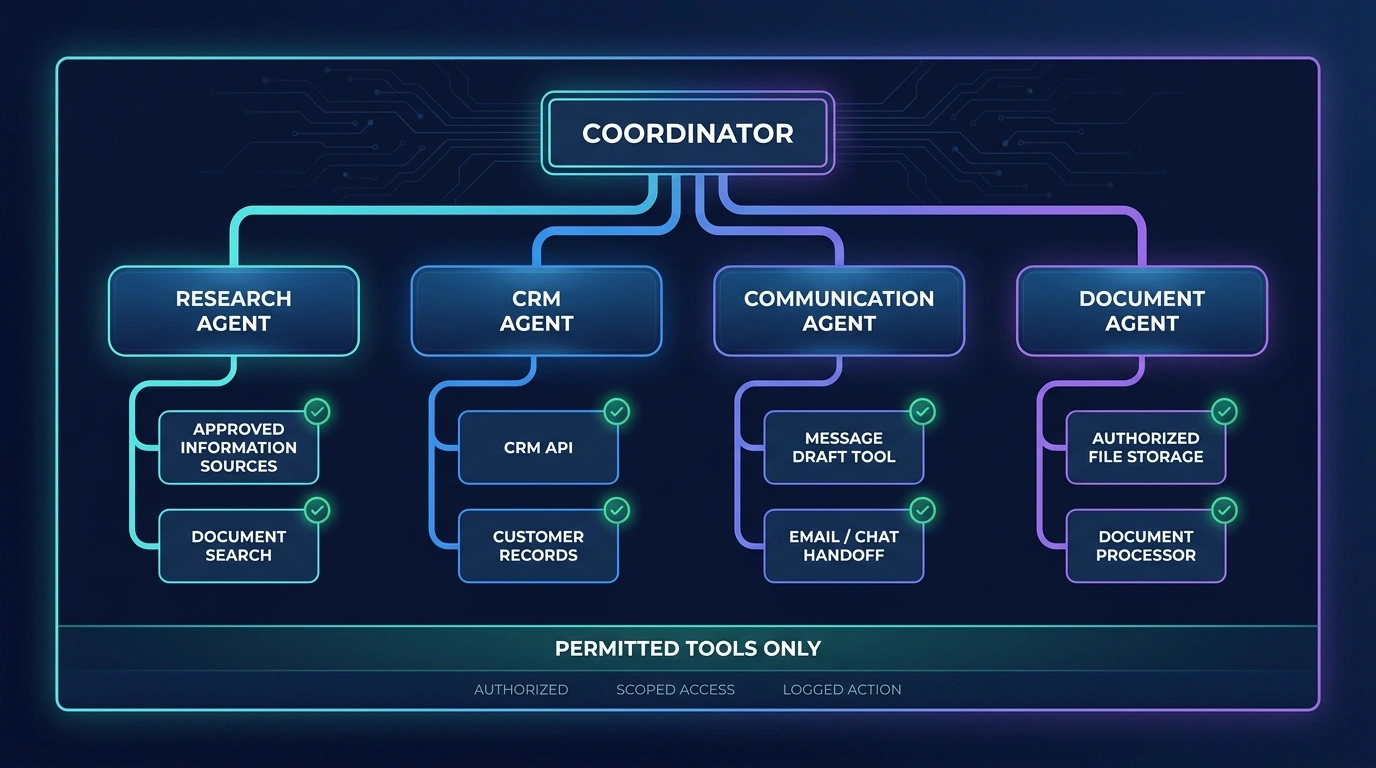
Controlled Tool Access
Controlled multi-task agent systems can assign approved tools to specialist roles according to defined responsibility, permissions, and project scope.
Human Control
Routine sub-tasks can continue according to configured rules while sensitive, uncertain, or exceptional conditions can pause for staff review where required.
Methodology
Our structured engineering methodology for designing reliable multi-task agent systems.
Identify target workflows, required outcomes, responsible owners, and operational boundaries.
Break complex goals into distinct task roles, dependencies, inputs, and handoffs.
Design specialist agents, coordinator behavior, task state, and domain scopes.
Configure approved information, role context, tools, credentials, and access boundaries.
Develop task sequencing, dependencies, result assembly, and review conditions.
Validate task paths, permissions, blocked states, exceptions, outputs, and approval routes.
Release the approved workflow, review practical behavior, and refine agreed controls.
Engineering Foundations
Ten business-friendly engineering controls built into every ASFIT multi-task agent system.
Execution stays tied to an agreed business objective and completion boundary.
Each task role has a defined responsibility and operating scope.
Relevant information is routed according to the task and permissions.
Approved actions are limited to configured systems and credentials.
Selected decisions can pause for authorized staff review.
Task progress and dependencies can persist between workflow steps.
Supported actions, decisions, exceptions, and outcomes can be recorded.
Blocked or failed tasks can use bounded retry, fallback, or escalation paths.
The system can stop safely or request help when it cannot continue appropriately.
The architecture can support compatible records, APIs, and business tools.
Ecosystem Connectivity
Supported systems and task roles can be connected through agreed permissions and compatible interfaces.
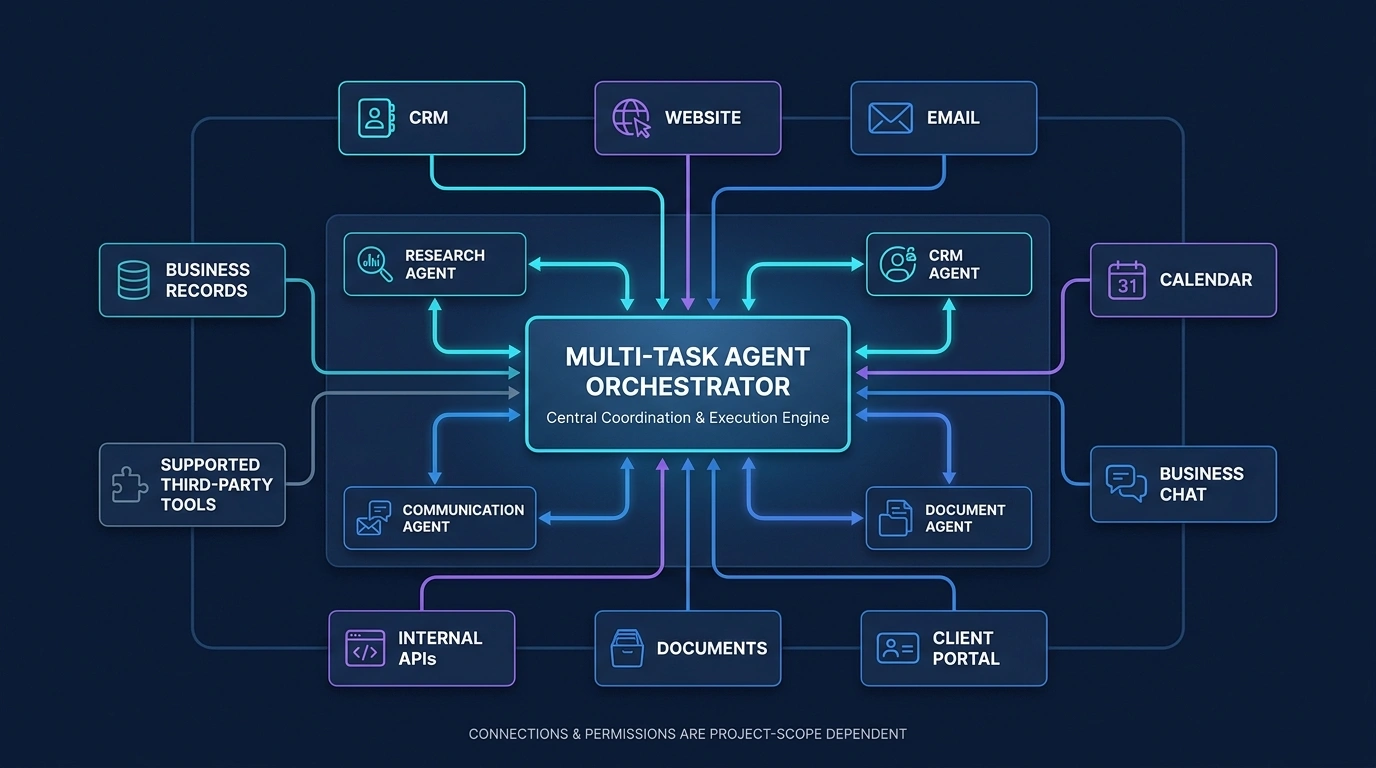
Available connections and task roles depend on project requirements, supported platforms, permissions, and approved access.
Qualitative Improvements
Qualitative operational shifts that can follow when a controlled multi-task agent workflow is designed around connected business objectives.
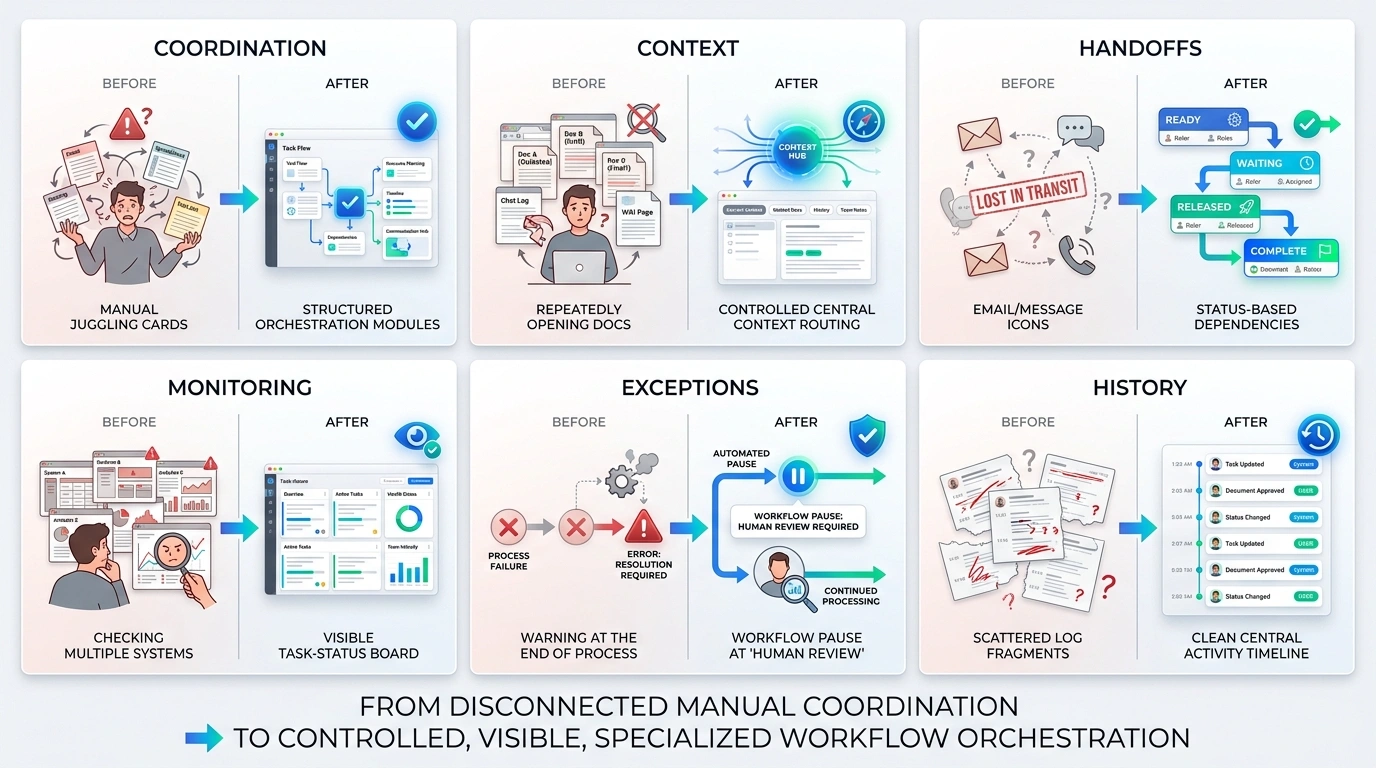
From: Manual multi-task coordination
To: Structured task orchestration
From: Repeated context gathering
To: Approved context shared where required
From: Manual task handoffs
To: Recorded workflow dependencies
From: Constant status checking
To: Visible task states
From: Exceptions discovered late
To: Defined escalation points
From: Scattered task history
To: Recorded activity and outcomes
Complementary Capabilities
Connect coordinated task roles with the business systems, interfaces, and workflows around them.
Questions & Answers
It is a controlled software system where specialist task roles coordinate around one defined business objective, using approved context, tools, dependencies, and review points.
A single agent may handle a broad sequence itself. A multi-task system separates responsibilities into defined roles coordinated by an orchestration layer, which can make dependencies and ownership clearer for suitable workflows.
Task roles can pass approved results, status, and context through configured handoffs. The exact communication pattern depends on the workflow, systems, permissions, and agreed scope.
Yes, where included. Each role can be assigned only the supported tools and permissions required for its responsibility.
A coordinator can route approved business information, records, instructions, policies, or prior task results to the roles that need them, without implying unrestricted access.
Yes. Configured dependencies can leave a task ready, running, waiting, blocked, or complete until its prerequisite result, data check, or approval is available.
Yes. Sensitive, uncertain, or exceptional conditions can pause a workflow for authorized staff review where the project includes those controls.
A project can include a workspace showing task states, dependencies, review queues, selected actions, progress, and recorded activity where supported and agreed.
Additional roles, tools, context sources, or workflow paths may be added when compatible with the existing architecture and agreed as further scope.
Share the business objective, current task handoffs, systems involved, permissions, review points, and desired outcome. ASFIT will review the workflow and recommend a practical scope.
Start Your Multi-Task AI Agent Project
Share the business objective, task roles, dependencies, systems, permissions, and review points your workflow needs. ASFIT Solutions can assess the process and define a controlled multi-task agent scope.


