

Be Easier to Discover
Help search engines reach and index important pages without avoidable crawl blocks, broken links, or redirect loops.
Structured Search Engine Optimization
Your website can look professional and still be difficult to discover. ASFIT Solutions reviews how search engines crawl and interpret your pages, clarifies on-page intent and metadata, and strengthens internal linking foundations so search engines and visitors can understand what you offer.
Grounded in technical hygiene and search intent, without guaranteed ranking promises.
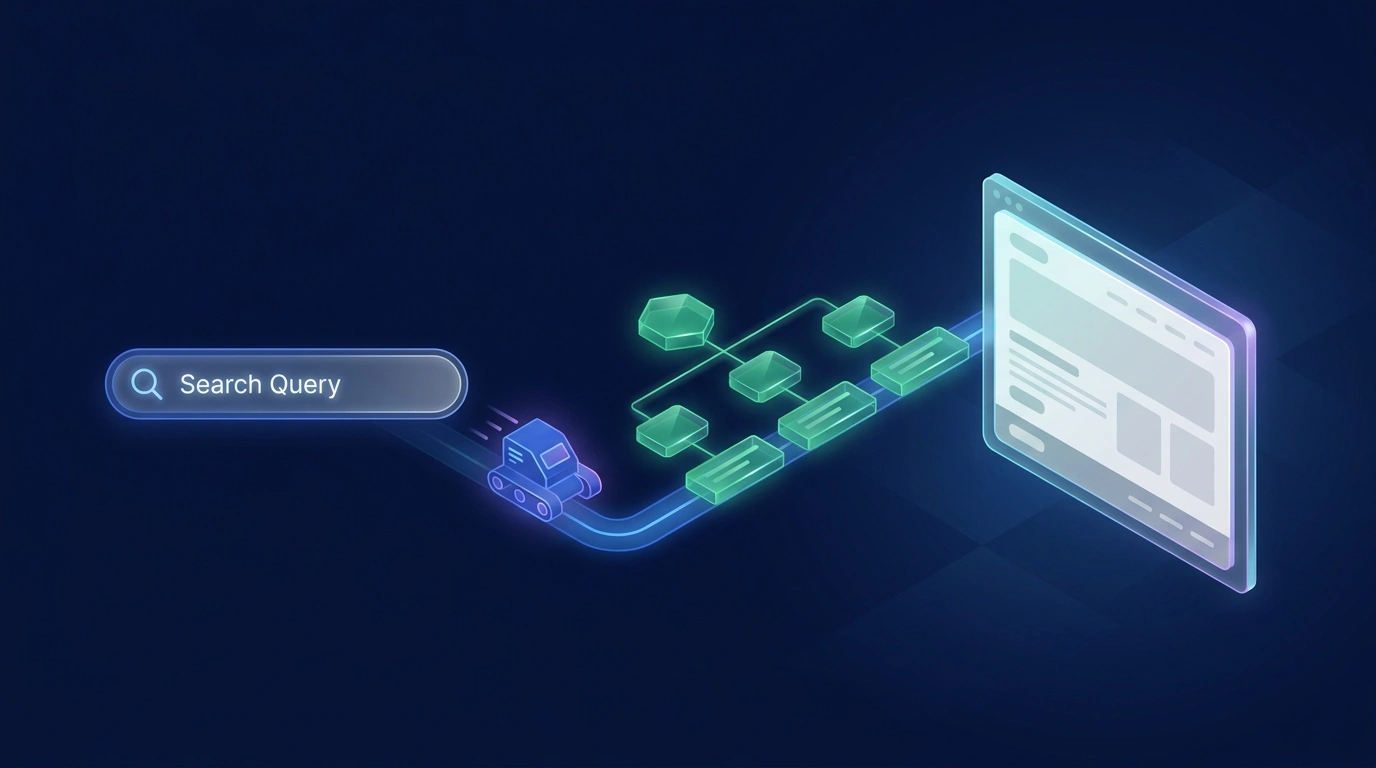
The Foundation of Discovery
Having a website does not automatically make its pages easy for search engines or users to find, crawl, or interpret. Sustainable SEO is a disciplined practice built on technical clarity, useful content, and logical page relationships.
Help search engines reach and index important pages without avoidable crawl blocks, broken links, or redirect loops.
Connect useful pages with the specific questions and services prospective customers search for.
Use clear headings, structured sections, and concise copy so visitors quickly recognize what each page offers.
Relevant organic discovery can introduce interested visitors to your business and its appropriate next steps.
Engineering Architecture Model
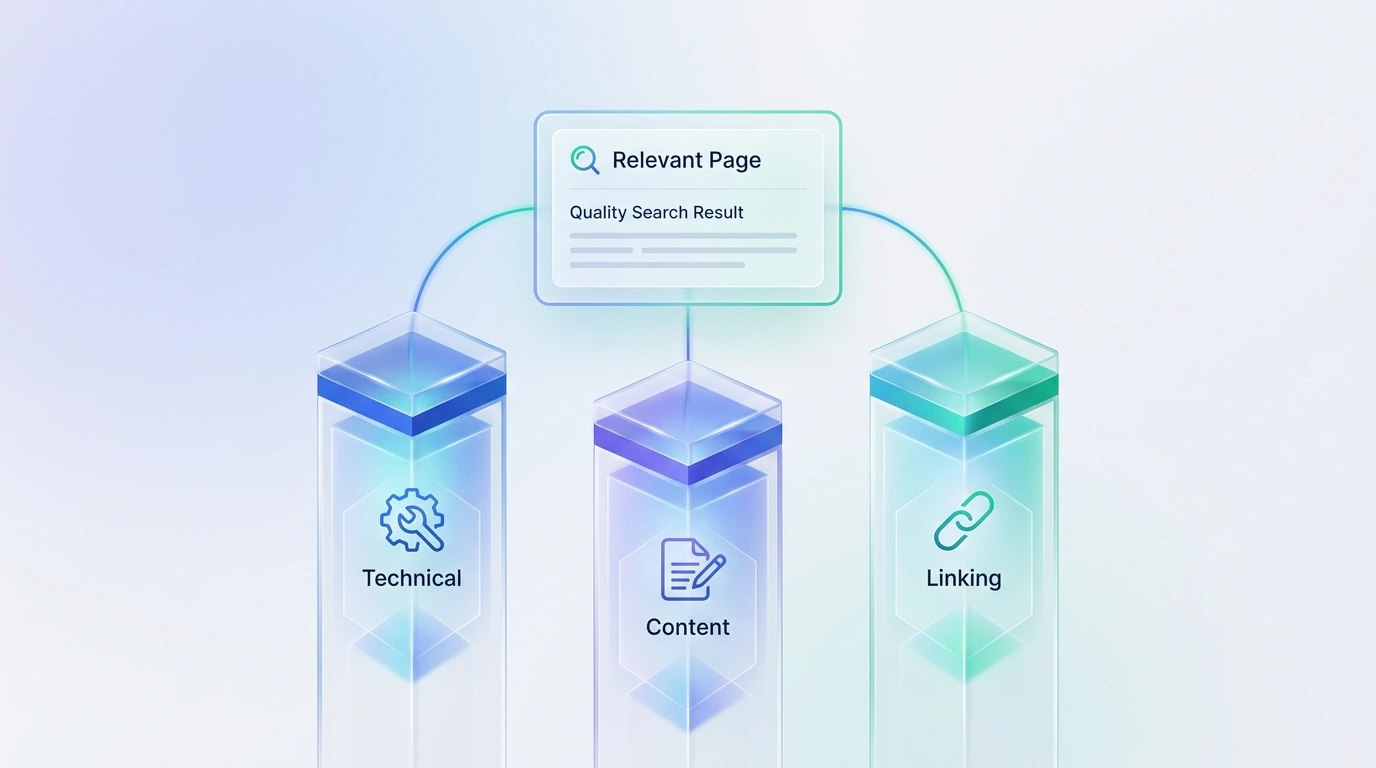
Technical foundations support access and interpretation. Content and metadata clarify page purpose. Site architecture and links connect useful pages into a navigable journey.
Honest expectation: SEO can strengthen the opportunity for relevant organic discovery. Commercial outcomes also depend on market demand, competition, reputation, the offer, and customer decisions.
Intent Alignment
A visitor should not have to restart their search after reaching your website. We map the need behind a query to useful page content and an intuitive next step.
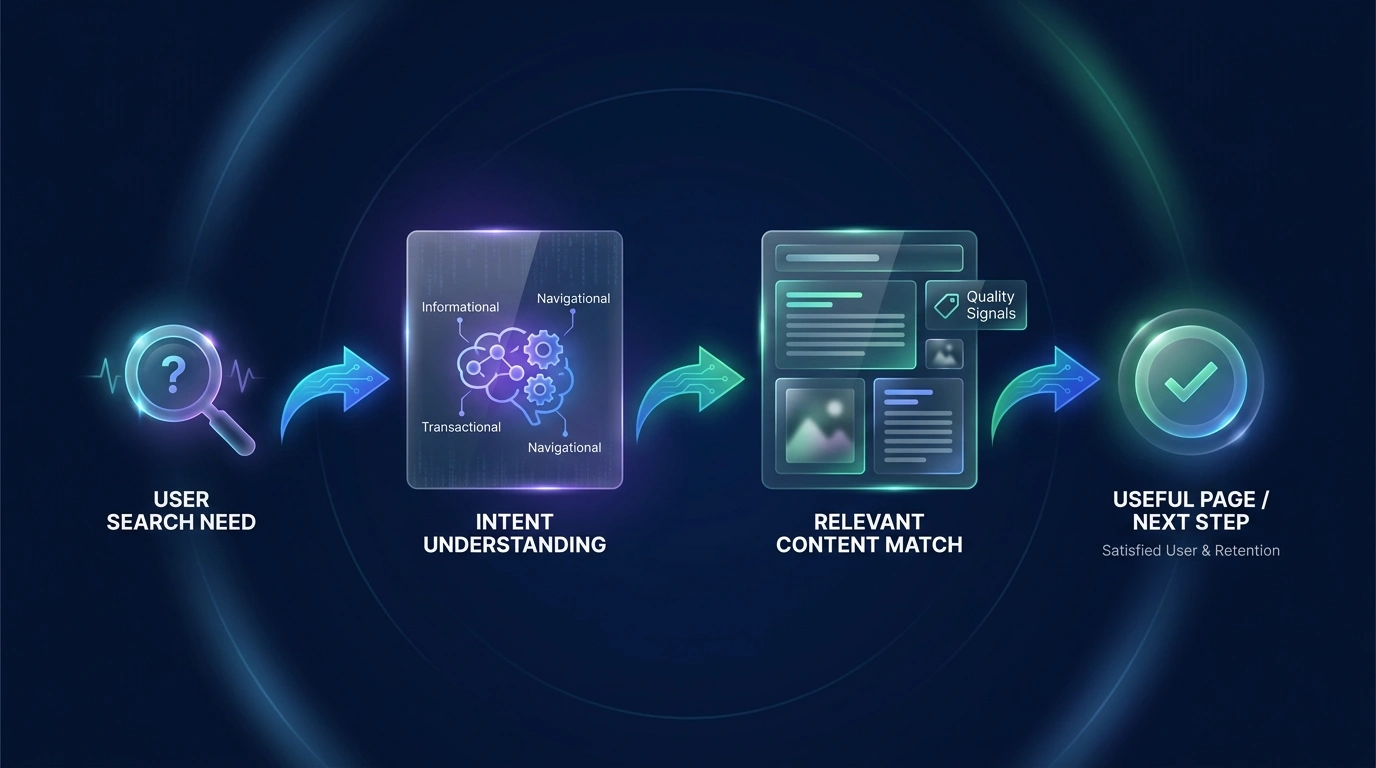
A potential customer has a problem, service requirement, or technical question that starts an online search.
Identify whether the visitor is learning, finding a known destination, comparing options, or looking for a service.
Match the search need with a useful page that explains the service, scope, and supporting information.
Provide a clear route to related detail, project proof, booking, or direct contact without unnecessary friction.
Search Visibility Barriers
You do not need to diagnose whether an issue is technical, structural, or editorial before contacting us. We review the site and explain practical priorities.
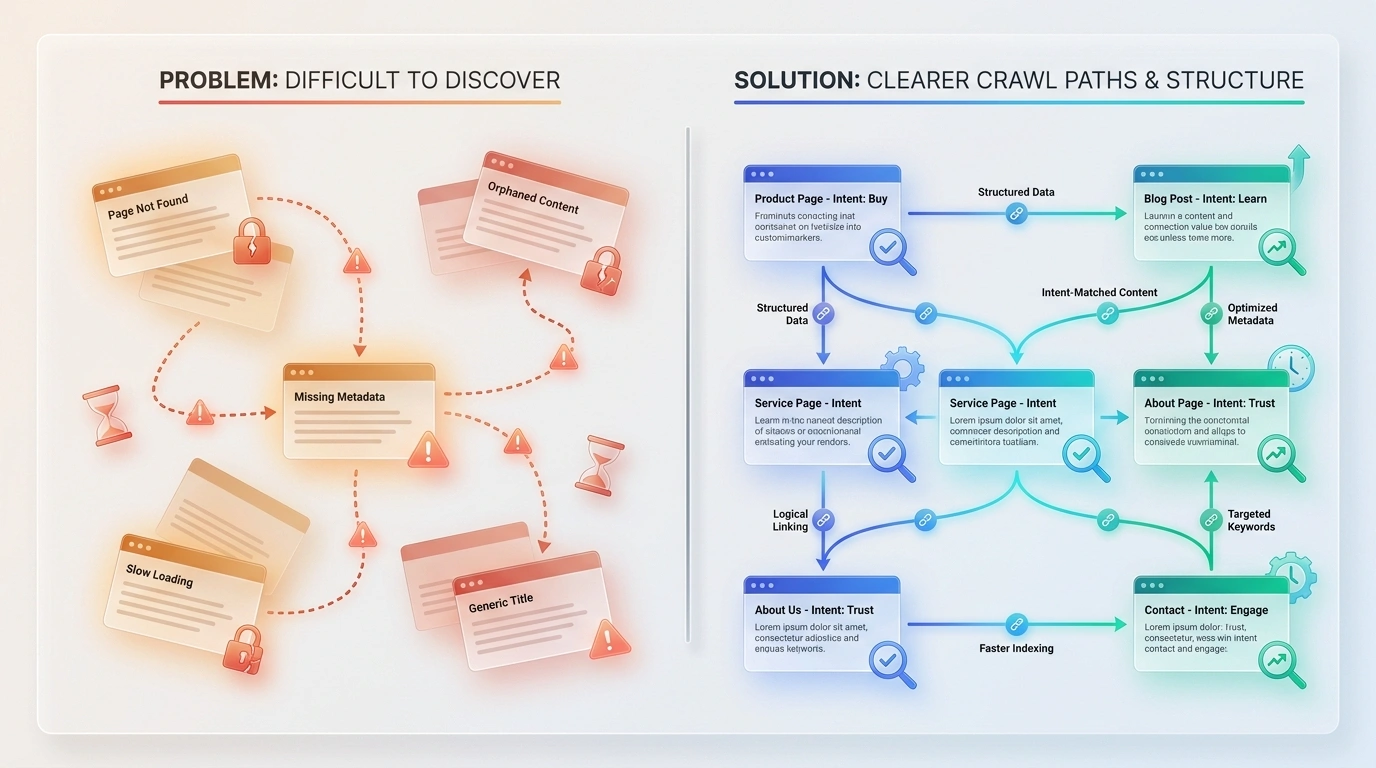
What Search Engines & Visitors Encounter
How ASFIT Structures the Solution
Page-Level Engineering
Visitors should recognize the service or answer they came to find within seconds. Titles, headings, useful content, and links explain that purpose without ambiguous context.
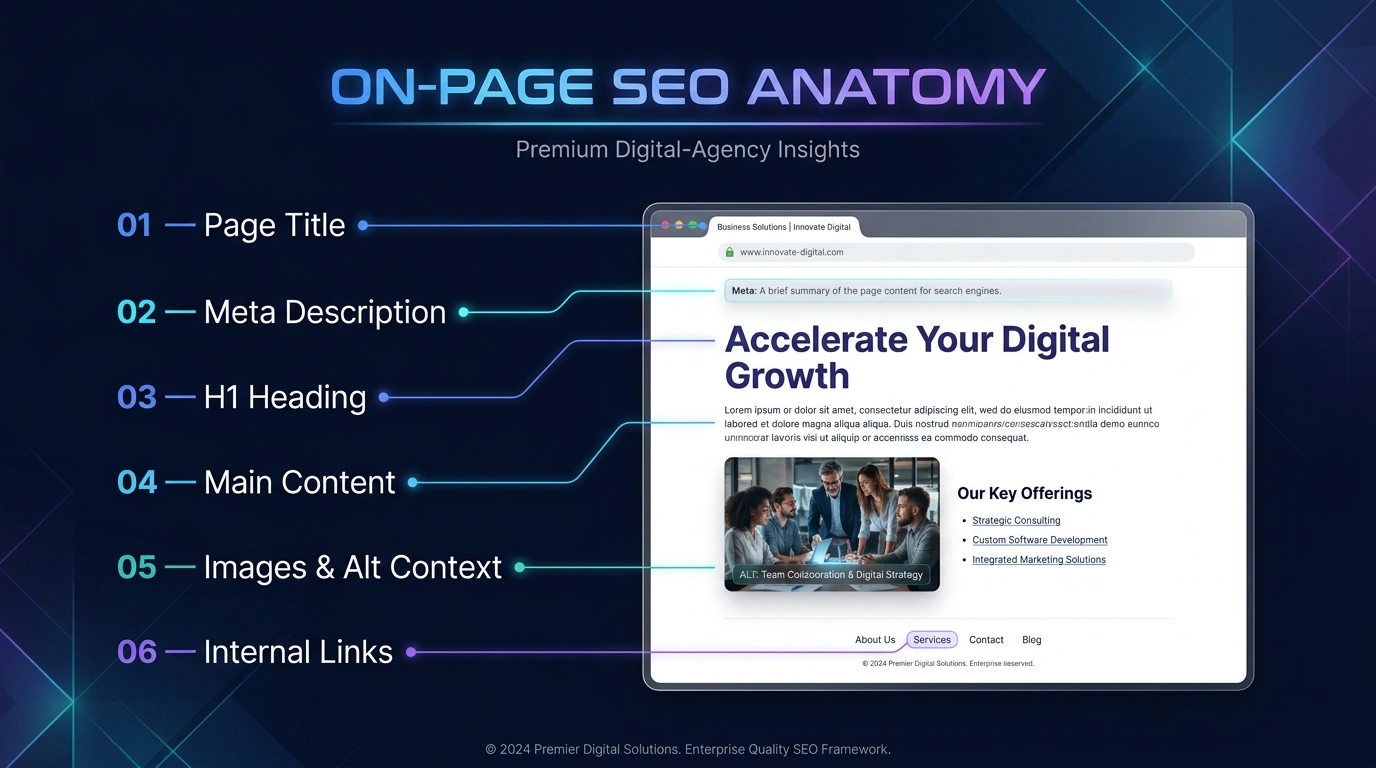
Concise, intent-aligned, and brand-appropriate.
<title>SEO Services | ASFIT Solutions</title>A useful summary written for the search result context.
<meta name="description" content="Practical SEO services...">One primary page heading followed by logical H2 and H3 sections.
<h1>SEO Services</h1>Useful sections that answer real questions about scope, process, and fit.
Deliverables, problems, audiences, process, FAQsAppropriately sized visuals with concise descriptions where the image carries meaning.
<img alt="SEO architecture diagram" loading="lazy">Contextual links that clearly name the next relevant destination.
<a href="/portfolio/">View related work</a>System Architecture
Search optimization works as a connected system. Technical foundations support access, page content explains relevance, and site structure connects related information.
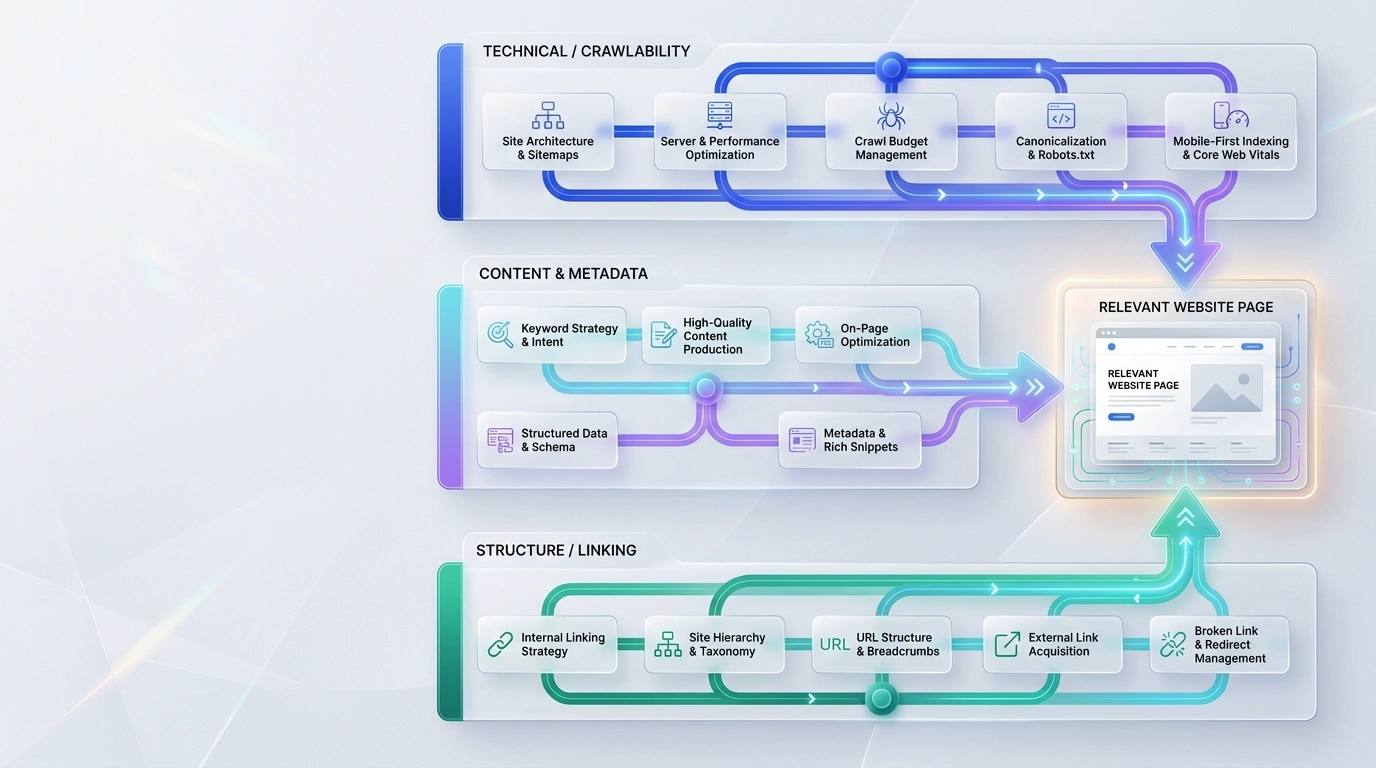
Review response codes, robots directives, sitemap output, canonical URLs, mobile behavior, performance concerns, and other agreed technical signals.
Structure titles, descriptions, headings, page copy, and appropriate structured data around the page purpose and visitor need.
Use logical page hierarchy, clear category relationships, and descriptive links that connect visitors with relevant information.
Site Taxonomy & Relationships
Intentional page relationships help visitors and search crawlers move between relevant services, useful content, project proof, and clear next steps.
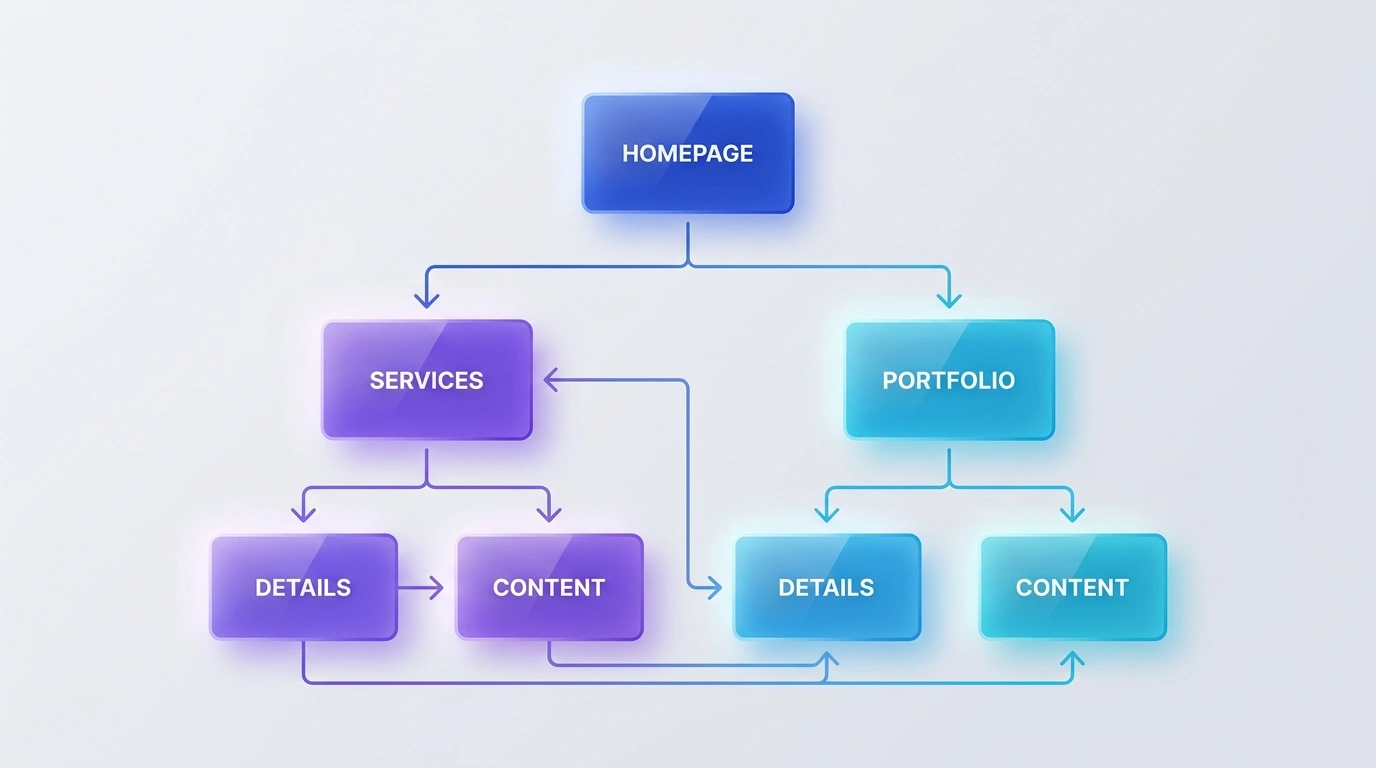
Group related topics under clear service, portfolio, and resource areas so their relationships remain understandable.
Keep important pages reasonably easy to reach as an ASFIT usability guideline, not a search-engine ranking rule.
Connect useful supporting content to relevant service pages with link text that describes the destination.
Identify published pages with no useful incoming navigation or contextual links and decide how they should fit the site.
Service Deliverables
The scope is tailored around your website condition and prioritized gaps. Each area combines practical improvements with verifiable technical work.
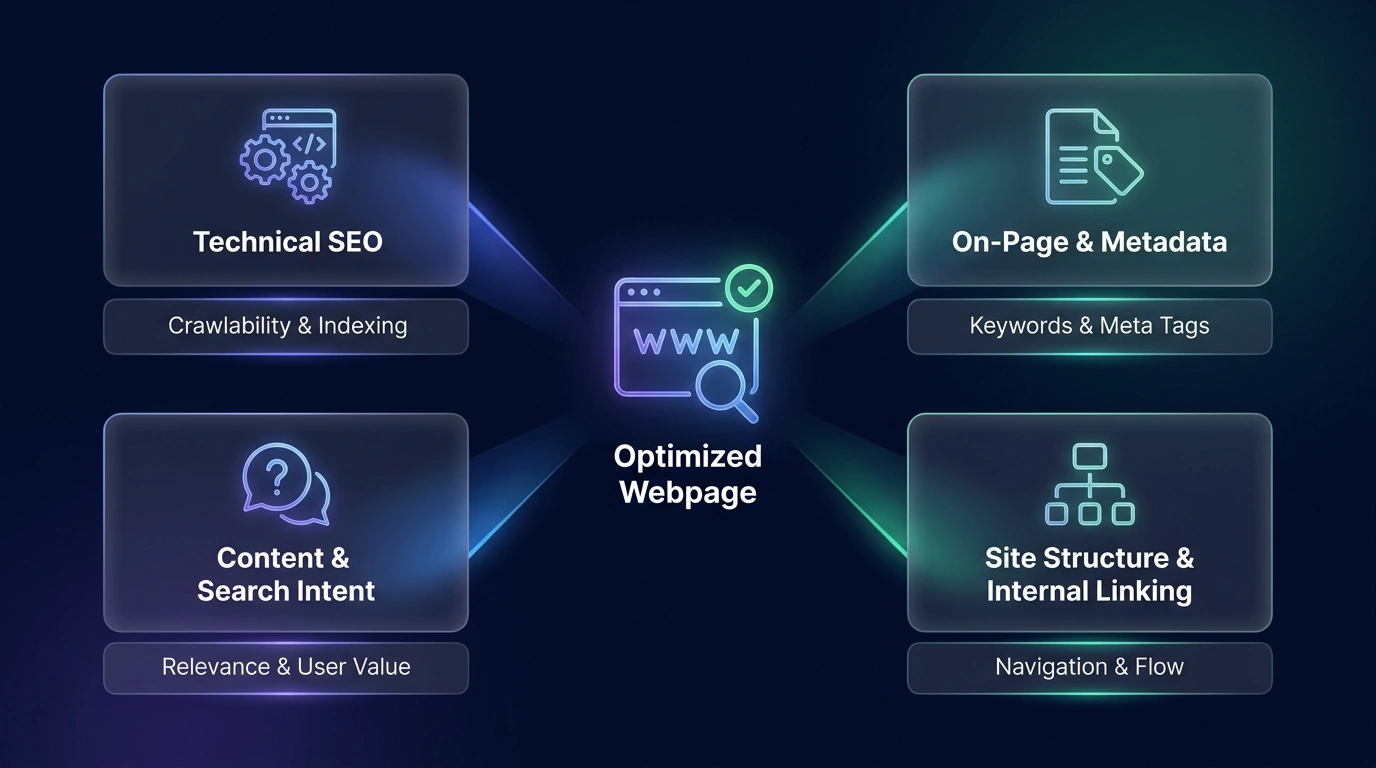
Crawlability & Indexing Foundation
Review technical obstacles that can affect page access and interpretation.
Message Clarity & Page Structure
Explain what each important page offers through structured, useful page signals.
Query Relevance & User Needs
Answer the questions people genuinely search for with useful content in the right place.
Hierarchy & Internal Authority
Connect important pages so services, project proof, and helpful content are not isolated.
Tailored Strategies
Different websites have different discovery barriers. We shape the review and agreed improvements around the business model, available content, and platform.
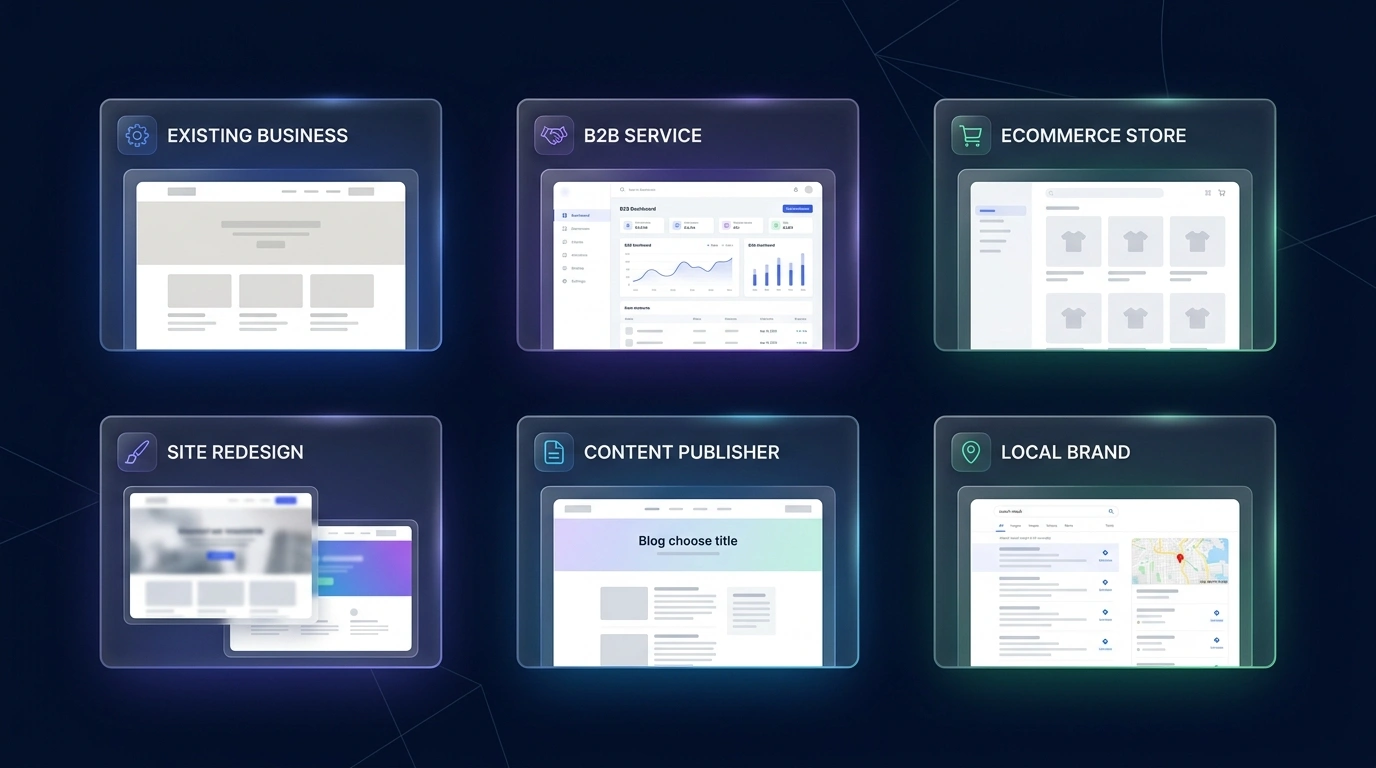
Review current crawl accessibility, indexing signals, page purpose, metadata, and internal linking before agreeing prioritized changes.
Give important services dedicated pages that clearly explain their scope, audience, supporting proof, and suitable next action.
Review product and collection hierarchy, useful descriptions, image context, structured data, and internal browsing paths.
Review redirects, changed URLs, canonical references, metadata, and content relationships during or after a redesign.
Plan useful topic groups and connect related articles to the services, resources, and information they help explain.
Clarify services, business information, and appropriate location context without promising a specific local search position.
Continuous Improvement
Search behavior, competitors, content, and website systems change. Further review can be useful when the project needs it.
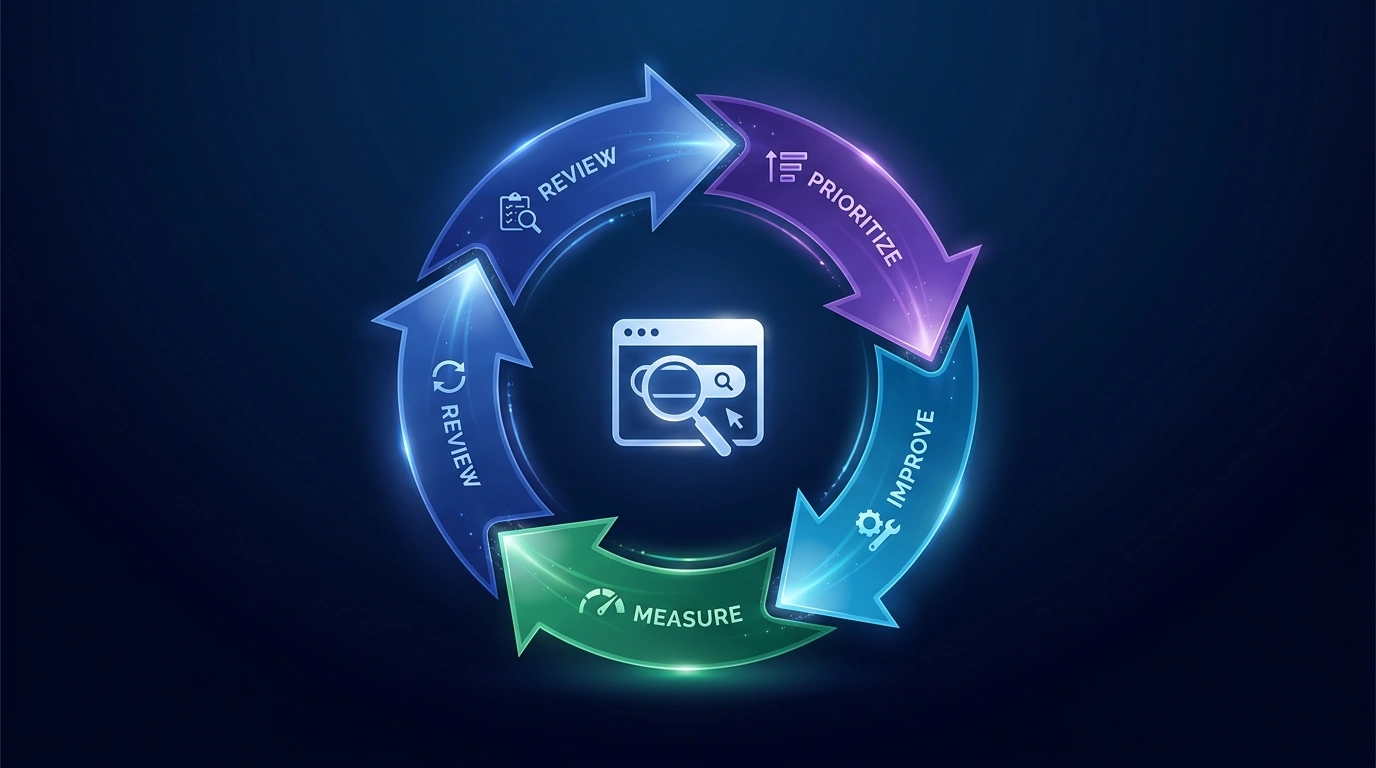
Revisit agreed crawl, content, query, and website signals.
Rank tasks by practical impact, urgency, and available effort.
Apply the agreed technical, metadata, content, or linking changes.
Observe available search and website information after implementation.
Identify useful follow-up work and repeat only where the project needs it.
Ongoing support is shaped around the agreed project and client needs; it is optional, not an indefinite or required retainer.
Diagnostic Rigor
An SEO improvement project can begin with a structured crawl and technical review so changes are based on observed issues and agreed priorities.
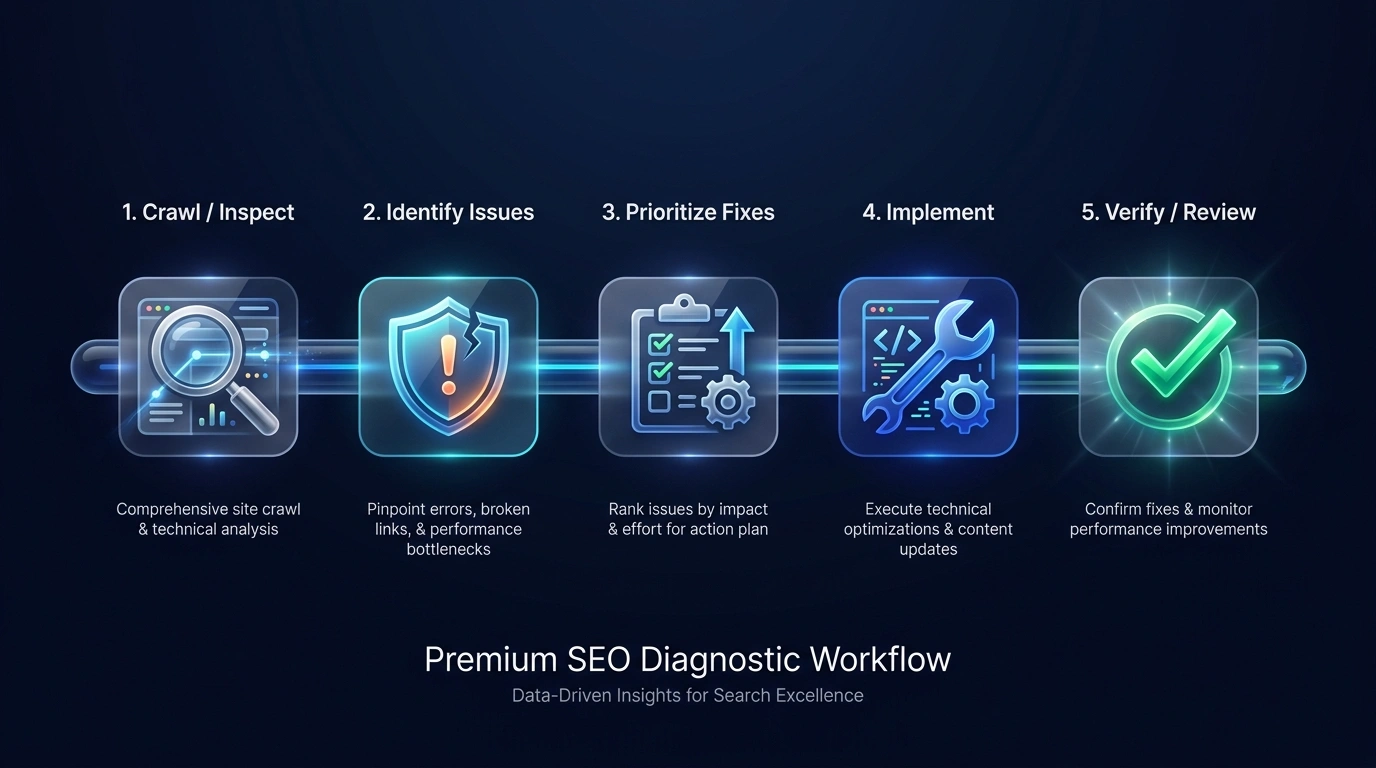
Review important pages, crawl paths, metadata, canonicals, sitemap, robots directives, and available indexing information.
Explain findings that affect access, meaning, or useful visitor paths without assuming one universal cause.
Agree practical priorities around important pages, visitor needs, risk, and implementation effort.
Apply approved technical, on-page, content, and internal-link improvements within the agreed scope.
Recheck completed work, confirm intended output, and document useful follow-up actions.
End-to-End Execution
Understand the sequence from discovery and audit through implementation, verification, and appropriate follow-up review.
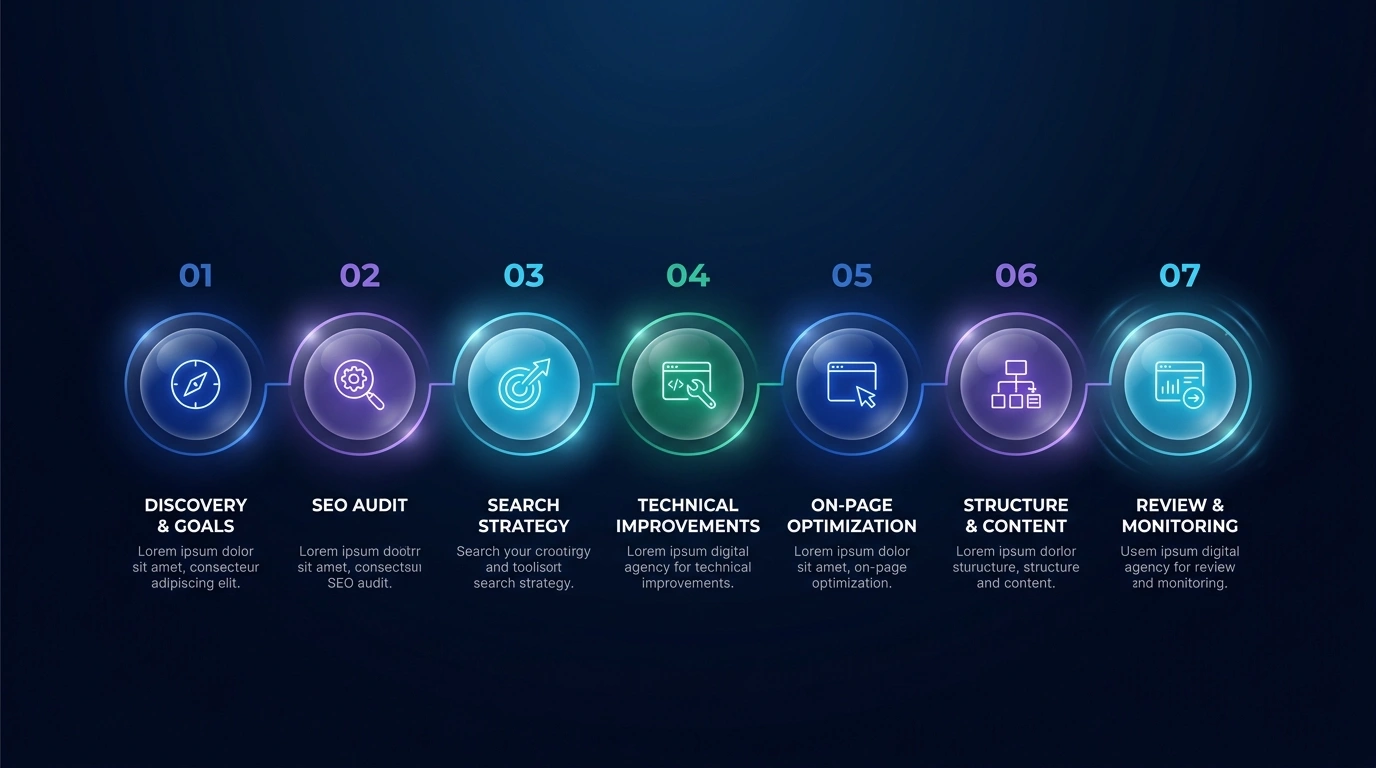
Review the website, important services, target audience, and current search concerns.
Inspect crawlability, metadata, headings, content, links, and technical foundations.
Map useful topics and visitor intent to the appropriate existing or planned pages.
Address agreed crawl barriers, sitemap, robots, canonical, mobile, or response-code findings.
Refine titles, descriptions, headings, page copy, image context, and appropriate schema.
Strengthen page hierarchy, contextual internal links, and useful supporting sections.
Recheck agreed changes and discuss future review points where they are useful.
Verifiable Data
We evaluate SEO through genuine technical hygiene, clean indexing, and available search information, without inventing numbers or manufacturing score claims.
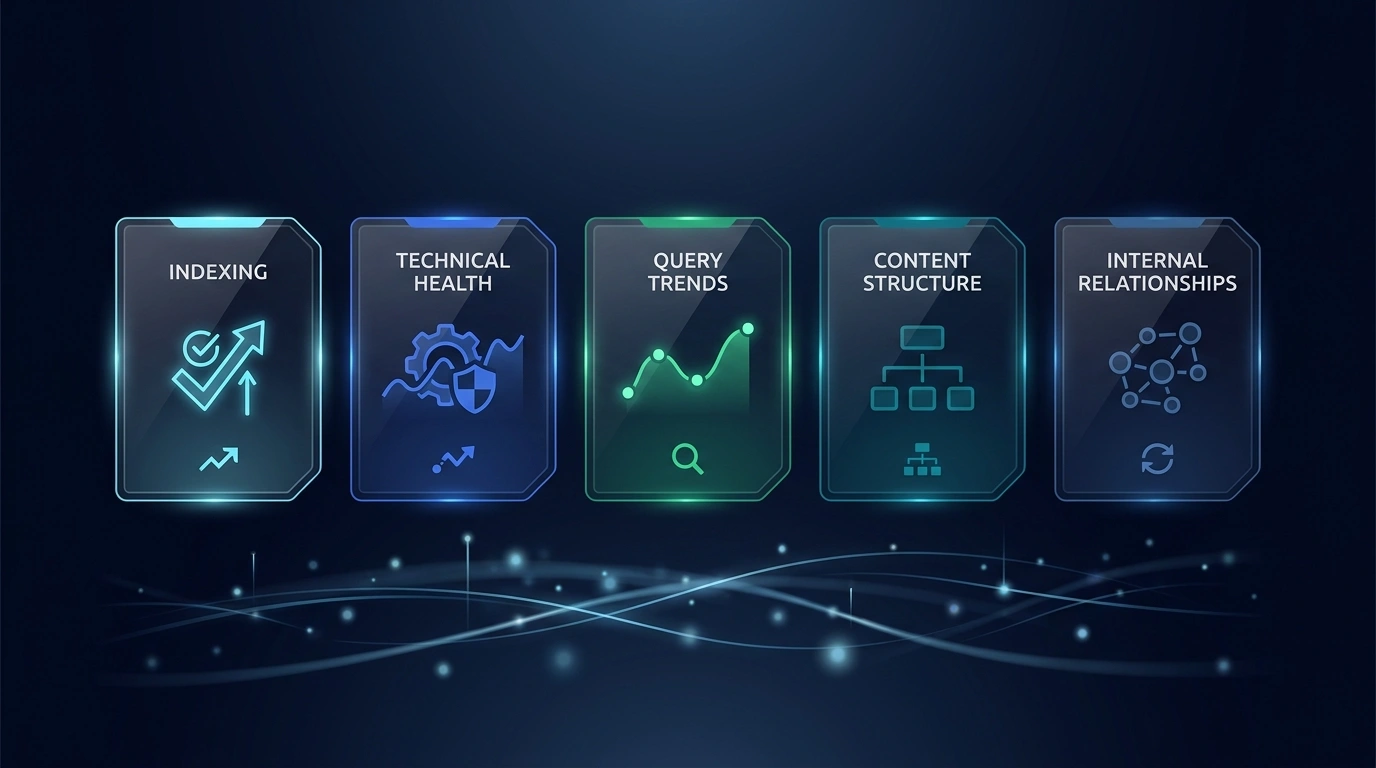
Review whether important pages are discoverable and represented as intended in available search information.
Track crawl findings, broken links, metadata issues, mobile behavior, and relevant technical changes.
Review how search patterns and page discovery change where reliable data is available.
Check whether important pages continue to answer their intended topic and visitor need clearly.
Review contextual links and navigation paths as services, articles, and project content change.
Measurable Impact
These examples describe technical and structural improvements. They do not promise a particular ranking, traffic level, or commercial result.
From: Important pages blocked, omitted, or difficult to reach.
To: Accessible page paths, appropriate sitemap entries, and reviewed indexing signals.
From: Generic or duplicated titles and missing descriptions.
To: Distinct, page-specific titles and useful meta descriptions where appropriate.
From: Thin service copy that leaves important questions unanswered.
To: Useful sections covering audience, scope, process, and relevant next steps.
From: Helpful content and important services left disconnected.
To: Descriptive links connecting relevant information and commercial pages.
From: Layout shifts, oversized assets, or controls that are difficult to use.
To: Responsive layouts, practical asset handling, and comfortable interaction.
From: Missing or unsuitable structured data for the visible content.
To: Valid, appropriate schema that describes supported page information without guaranteeing rich results.
Integrated Ecosystem
Search foundations work best when supported by clear website architecture, focused service pages, usable ecommerce experiences, and practical ongoing care.
Questions & Answers
Clear answers about technical scope, realistic expectations, timelines, platforms, and how the work is reviewed.
SEO services help improve how search engines access, understand, and relate your website pages to relevant searches. Work can include technical checks, page titles and headings, useful content, search-intent research, and internal links. The aim is a clearer foundation for discovery, not a guaranteed ranking or business result.
A page may be difficult to access, not indexed, unclear in purpose, or less relevant to the search than other available pages. A new or changed website may also need time to be discovered and reviewed. ASFIT checks the website and available search information before recommending changes rather than assuming one cause.
Technical SEO reviews whether important pages can be accessed and interpreted as intended. This can include crawl and indexing signals, sitemap and robots settings, canonical URLs, broken links, mobile behavior, and performance concerns. Findings are prioritized around the website and agreed scope.
On-page SEO makes a page topic and purpose clearer through titles, descriptions, headings, useful content, image context, and related links. Appropriate structured data may also help describe the content. These details should support the information a visitor came to find.
Yes. Share the current website and important services or pages. We review technical access, content, metadata, and page relationships, then agree practical priorities. You do not need to rebuild the website simply to request an SEO review.
SEO foundations can be planned before launch, including page hierarchy, useful content, headings, metadata, and internal links. This gives important pages a clearer starting point for discovery, but a new website is not guaranteed immediate visibility or rankings.
There is no fixed timeline that applies to every website. Implementing a change and seeing its effect in search are different stages. Timing depends on the work, how search engines revisit and assess pages, competition, and the existing website. We clarify scope and useful review points without promising a date for rankings or traffic.
No. Search engines determine rankings, and results depend on relevance, content quality, website authority, competition, and other changing factors. ASFIT improves agreed search foundations but does not promise a particular position, traffic level, or first-page placement.
No. Relevant discovery can create opportunities for potential customers to reach your website. Enquiries and purchases also depend on the offer, visitor experience, trust, market conditions, and the customer decision. SEO supports that journey but does not guarantee leads, sales, or revenue.
Yes. We can review page and content structure, titles, metadata, internal links, image context, and relevant technical settings on WordPress or Shopify. Available changes depend on the platform, theme, integrations, access, and agreed scope.
A one-time review and improvement scope can address specific needs. Websites, content, competitors, and search behavior change, so further review may be useful later. Ongoing support is optional and agreed around the project; it is not a required recurring contract.
Use Start Your SEO Project to share your website URL, important services or pages, target audience and locations, current search concerns, and useful competitor examples. Relevant search information can help when available. We review the situation and clarify the practical scope and access needed before work begins.
Start Your SEO Project
Tell ASFIT Solutions about your website, SEO issue, service pages, and target audience. We will review your requirements and suggest the right SEO improvement direction.


